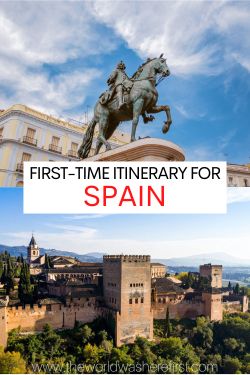
It’s hard to think of a destination I love more than Spain – it’s such a vast country with so many culturally distinct regions that you can easily spend months or years exploring it and still find something new to discover.
However, if it’s your first trip to Spain and you’re limited in time, you’re going to want to hit the highlights and get a holistic view while not biting off more than you can chew (though there will be plenty of time for tapas!).
This 2-week itinerary outlines an ideal route for a first trip to Spain, taking you to three different regions and numerous cities. The only problem is that you will likely leave with more trips planned.
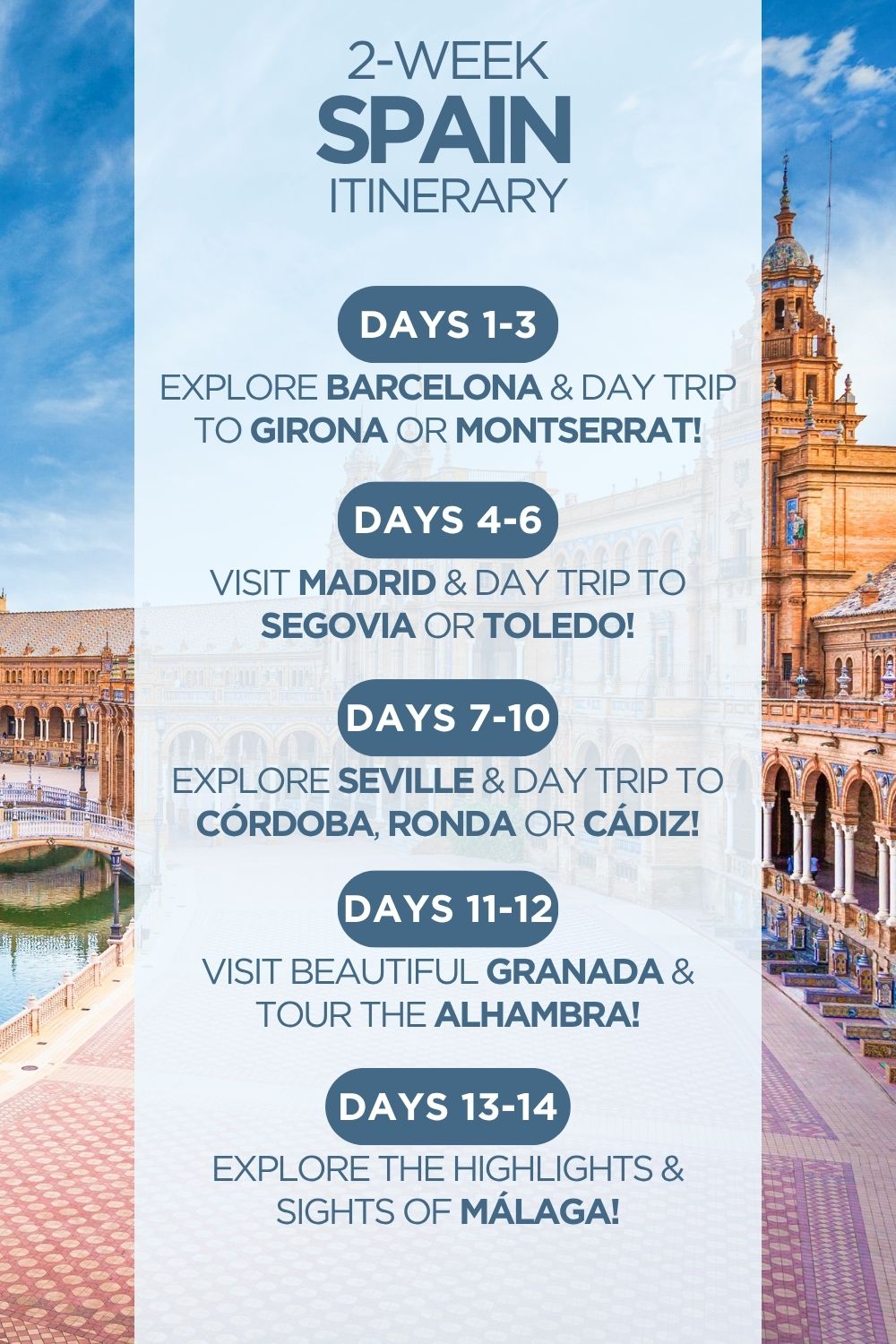
Table of Contents
How Many Days in Spain?
There’s no prescriptive amount of time in Spain that will ever feel like enough, however, if you are visiting for the first time, then I think that allotting 2 weeks is the sweet spot.
This allows you time in Barcelona and Madrid with enough time to see the highlights of the city and go on a day trip.
It also gives you ample amount of time to see a lot of Andalucía – from cities like Seville and Granada to the Mediterranean coastline in Málaga. With 2 weeks, you can walk away with a holistic view of the country and also be able to see its regional differences.
Getting To & Around Spain
Spain is well-connected no matter where you’re coming from, with major airports and an excellent public transit network. I’ve structured this itinerary to begin in Barcelona and to go from north to south and the Catalonian capital makes for a good jumping-off point.
It is home to a large, international airport with connections all over the globe, along with train and bus connections from across Europe.
This itinerary can be tackled completely via public transport and in Spain, that means either the train or bus. If you want to make the most of your time, the train is the most efficient.
There are high-speed train connections between all of the major destinations on this route and you can make it from point A to B in a matter of of a few hours, depending on the journey. This gives you more time in your destination rather than in transit.
The drawback to high-speed trains is that they are the most expensive option – especially if you’re trying to keep your Spain travel costs low. There are slower regional trains that will be less expensive and by far the least expensive option is the bus, however, you will find this the slowest.
With only a limited amount of time in Spain and a lot of ground to cover, I do highly recommend relying on the high-speed rail option. You can browse options here.
You could hire a car, which is something I generally recommend if you’re diving deeper in a regional itinerary. With a car, you do have the added benefit of being able to make stops along the way and you’ll have a bit more general flexibility.
However, a car isn’t altogether necessary for the itinerary below and, with the abundance of train connections and the urban setting, a car can honestly be more of a hindrance than a help for this particular route.

2-Week Spain Itinerary
Day 1 – Barcelona
Catalonia’s inimitable capital is also Spain’s most popular destination, and it’s not without reason. This makes it a wonderful jumping-off point for your trip to Spain and the perfect place to spend the first three nights of your trip.
On your first full day in Barcelona, take the time to get to know the city. See sights like the Houses of Gaudí and walk along the famed La Rambla. Browse through local produce and sample some great food at La Boqueria market.
Wind down your day by exploring the historic Gothic Quarter and enjoying the seaside vibes of La Barceloneta.

Where to Stay in Barcelona
Room Mate Anna – A centrally-located modern hotel, this place has comfortable rooms, a good breakfast and an outdoor swimming pool.
Hotel Condado – Situated within a short walk of many of Barcelona’s top attractions, this mid-range hotel offers breakfast, air-conditioned rooms and a 24-hour front desk.
Fabrizzio’s Petit – A great hostel for budget or solo visitors to Barcelona, this one is centrally located, offers dorms and private rooms and has great common areas.
Not quite what you’re looking for? Click here to browse more Barcelona hotels!
Day 2 – Barcelona
Begin your second day by touring Barcelona’s most famed attraction, the Sagrada Familia (pre-book tickets here). This will take a couple of hours, and after that you can take in more of Gaudí’s architecture in Park Güell.
The Bunkers of Carmel are also an excellent stop and provide incredible views over the city. End your day enjoying some of Barcelona’s many bars and restaurants.

Day 3 – Montserrat or Girona
On your third day in Barcelona, consider venturing out of the city to see a bit more of Catalonia. Some of our favourite day trips include to the gorgeous mountains of Montserrat or to the lovely city of Girona.
Montserrat is a popular choice and it’s only about an hour from Barcelona. Here, you can take a cable car up the mountain and visit the Santa Maria de Montserrat Abbey. If you don’t want to go independently, you can also book a guided tour.
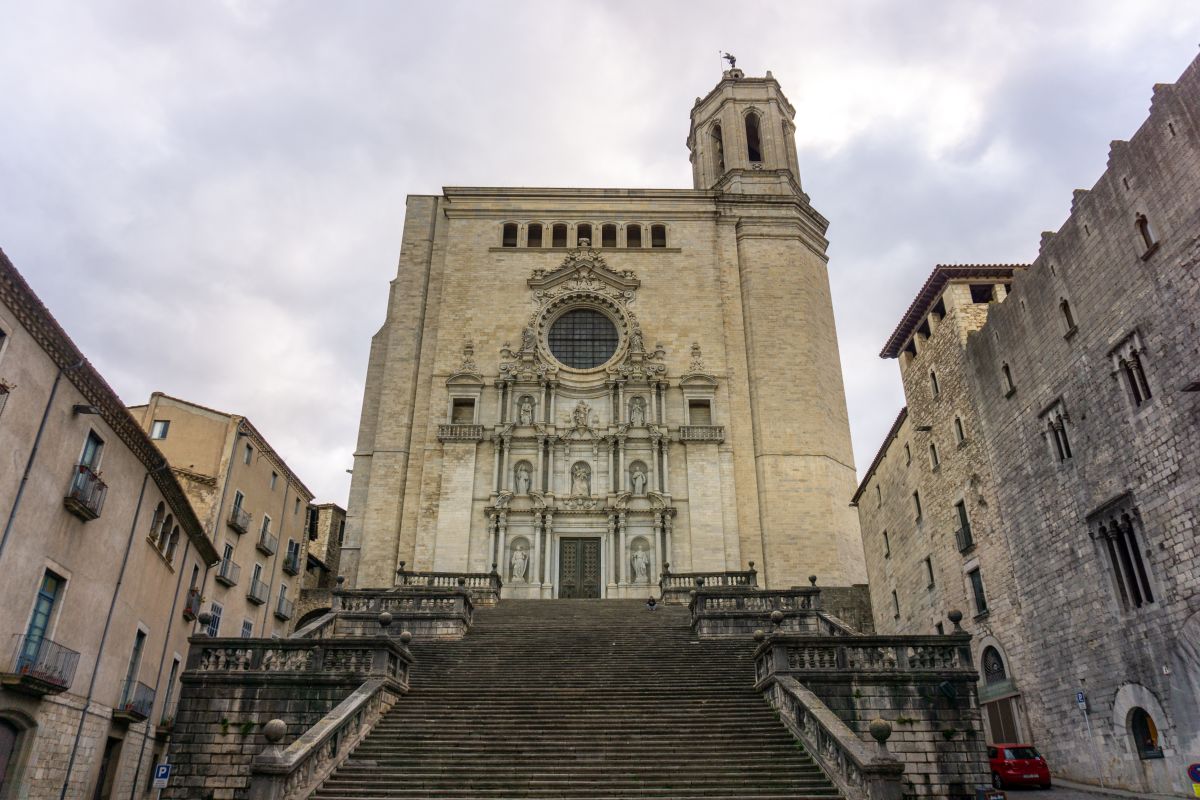
Girona is a small city located a bit north of Barcelona and it also takes about an hour to get there by train. In my opinion, Girona is one of the most beautiful cities in Spain and if you get a chance to visit, I highly recommend it.
Here, you can visit the Jewish Museum, take the historic Arab Baths, walk along the old city walls and generally enjoy the vibe of a smaller Catalonian city. You can also take a day tour to Girona.

Day 4 – Madrid
It’s time to kiss Catalonia goodbye and make your way to the capital of Spain, Madrid. To really maximise your time here, I highly recommend getting as early a start as possible to ensure you have close to a full day in the city.
The fastest trains from Barcelona to Madrid take about 3 hours. Madrid is a city that gets a late start, so if you leave the Catalonian capital early, it means you can really maximise your day in Madrid by the time you arrive.
If you’re hungry when you arrive, make a beeline for the Mercado de San Miguel in the centre of the city. Though this is more of a food hall than a traditional market, you can still get some incredible madrileño specialities here.
Then, make your way to the iconic Prado Museum, one of the most notable art museums in the world. You can easily spend hours here and it’s something you can’t miss in Madrid.
Wrap your day up by hopping between tapas bars in the La Latina neighbourhood.
You’ll be spending the next three nights in Madrid, so this is just one night of many tapas crawls!

Where to Stay in Madrid
Only YOU Boutique Hotel – Situated in a restored 19th-Century palace in the centre of Madrid, this hotel has lovely rooms, a fitness centre, an on-site bar and a superb breakfast.
II Castillas Madrid – A great mid-range option close to the Puerta del Sol, there are several basic rooms to choose from along with a restaurant, bar and good breakfast available.
Pension Foster – A comfortable budget option, this hotel is located 200 metres from Gran Vía. All rooms are air-conditioned, and some even have a balcony.
Not quite what you’re looking for? Click here to browse other hotels in Madrid!
Day 5 – Madrid
Spend your second day in the Spanish capital digging a bit deeper and seeing some of the top sites in the city. You can tour the gorgeous Palacio Real and then take a leisurely stroll through the massive Retiro Park.
Enjoy the incredible architecture on Gran Vía before, maybe, visiting another museum. I highly recommend the Museo Reina Sofia, especially if you’re interested in modern art.
You can wind up your day by exploring the bars and markets in the hip Lavapiés neighbourhood.

Day 6 – Toledo or Segovia
You could spend this day in Madrid if you’d like, but I suggest taking the time to do a day trip out of the city and to see a little bit more of what Central Spain has to offer. There are lots of options available, but the two most popular are the cities of Toledo and Segovia.
Toledo is easy to reach from the centre of Madrid in about 30 minutes. It’s gorgeous and packed with history with plenty of things to do to occupy an entire day.
Known as the “city of three cultures” due to the extensive history of Jews, Christians and Muslims all calling it home at one period or another, it was also once the capital of Spain.
Segovia is another wonderful day trip option, and perfect for those interested in a bit of Roman history. Known for its incredibly well-preserved aqueduct in the centre of the city, there is also a fairy-tale-like Alcázar (castle), an imposing cathedral and charming historic streets to get lost in.
And if you can’t decide which of these cities you’d like to visit, you can book a day tour that includes them both.

Day 7 – Seville
Once again, I recommend getting an early start today so you can have the most time in Seville as possible. From Madrid, you can reach Seville in just under 3 hours on the fast train and, believe me, you’re going to want a lot of time here.
The capital of Andalucía will be your base for the next four nights, but there’s a lot to explore so you don’t want to waste time!
Once you arrive, take the time to explore the highlights of the old town. I recommend starting at the incredible Seville Cathedral, which is one of my favourites in all of Spain.
Then, take a stroll through the historic Barrio Santa Cruz before ending your day by watching the sunset from the iconic Metropol Parasol.

Where to Stay in Seville
Hotel Bécquer – Situated in Seville’s old town, this hotel offers family rooms along with twins and doubles. There is a bar, a swimming pool and a superb breakfast available.
Monte Triana – A luxe hotel located in the Triana district, this place has a gorgeous rooftop swimming pool along with modern and comfortable rooms.
Onefam Catedral – Offering free dinner and free sangria some nights of the week, this hostel is perfect for budget and solo travellers looking for a social and affordable place to stay.
Not quite what you’re looking for? Click here to browse for more hotels in Seville!
Day 8 – Seville
Begin your second day in Seville in the super cool Triana neighbourhood. Once its own distinct city, today it’s a part of Seville, but it has its own unique character.
The highlight of the area is the Mercado de Triana, where you can sample tonnes of local produce and experience a central part of Spanish life.
After exploring the market, make your way across the river and head to the Real Alcázar. This is an elaborate Moorish palace and one of the highlights of visiting Seville. Finally, round out your day by taking in the beautiful Plaza de España.

Day 9 – Córdoba
After 2 full days in Seville, I recommend using the final two days for some day trips to explore more of Andalucía. And one of the top places to visit is the beautiful city of Córdoba.
Located a bit north of Seville, the highlight of Córdoba is the incredible Mezquita-Catedral. This mosque-turned-cathedral is absolutely beautiful and it’s one of the top places to visit in Spain for a reason.
Córdoba also has a historic Jewish quarter worth exploring and an excellent tapas scene, so you won’t go hungry while you’re there! You can also book a guided day tour here.

Day 10 – Ronda or Cádiz
Your final day in Seville accounts for another day trip and you have a couple of options. If you’re keen to go to the seaside, enjoy a unique tapas scene and take in a beautiful coastal city, consider heading to Cádiz.
The city is compact and walkable and it’s super easy to see all of the highlights within the confines of one day.
Alternatively, you could head to the historic town of Ronda. Perched high on a hill overlooking a gorge, Ronda is perhaps best known for its stunning Puente Nuevo, a dramatic bridge that connects the old town and new town.
Ronda is another town that is easily explored in one day, and it’s also worth a visit so it really depends on what you’re after for this day!

Day 11 – Granada
Day 11 sees you venturing further into Andalucía and the penultimate destination is one of my favourite cities in all of Spain – Granada. You can reach this city in about 3 hours from Seville, so I’m going to recommend an early start once more.
Granada is perhaps most famous for the Alhambra, which is the main attraction here, but it has so much more than that. The food scene alone makes it worth visiting (you get a free tapa with a drink order here!).
Spend your first day getting to know the city and exploring the Albaicín, which is the old Arab quarter of the city. Make sure to enjoy the sunset at the Mirador de San Nicolás and, of course, hop between as many tapas bars as you can!

Where to Stay in Granada
Hotel Rosa D’oro – Located in the old town between the Albaicín and Alhambra districts, this restored convent has bright rooms, each equipped with its own minibar, bathroom and air conditioning.
Hotel Los Tilos – Centrally located within easy reach of Granada’s top attractions, this hotel has plenty of modern rooms, a good breakfast and even offers an airport shuttle.
El Granado Hostel – Situated in the city centre, this convivial hostel offers a great social atmosphere along with multiple dorms and private rooms to choose from.
Not quite what you’re looking for? Click here to browse more Granada hotels!
Day 12 – Granada
Spend this day visiting the Alhambra. You need to book your tickets to the Alhambra well in advance if you want to go independently and keep in mind that entry into the Nasrid Palaces is timed. Planning around that, expect to spend several hours exploring this gorgeous historic castle complex.
In the afternoon, wander up the hill past the Albaicín and into the Sacromonte district. This area is known for its historic cave dwellings and for being a home of flamenco. You can also take in absolutely stunning views from the San Miguel Alto Viewpoint nearby.

Day 13 – Málaga
Your final destination on this itinerary is another of my favourites – Málaga. Located only about an hour south of Granada, this thriving city on the Mediterranean is such a lovely place to explore.
Spend your day exploring the Alcazaba de Málaga, which is a historic fortress that is perched over the city. It has a palace and beautiful gardens to wander through. You can also take in the Roman Theatre just below it before visiting the Picasso Museum.
Just take the time, as well, to wander the lovely, lively city streets of this gorgeous place.

Where to Stay in Málaga
Hotel Sur Málaga – This hotel, located in central Málaga, has numerous comfortable rooms to choose from and a location within easy reach of some of the city’s top sites.
Vincci Larios Diez – A modern hotel, this is a great option for those after an upmarket stay. There are bright, spacious rooms along with a sun terrace, room service and more.
The Lights Hostel – Excellent for those after an affordable social atmosphere with a central location, this hostel has both dorms and private rooms on offer along with great common areas.
Not quite what you’re looking for? Click here to browse other hotels in Málaga!
Day 14 – Málaga
On your final day, you have a couple of options. You could spend it in Málaga, which would be my recommendation, or you could head out on a day trip.
If you plan to remain in the city, start your day at the Mercado de Atarazanas – Málaga’s main market hall. Stop by the Museo dl Vino to learn about the region’s viticulture and then plan to explore the colourful Soho neighbourhood. Round out your day along the Mediterranean on Malagueta beach.
Alternatively, you could head out on a day trip. Places like Marbella and Estepona on the Costa Del Sol are great options, or you could even visit the tiny British Overseas Territory of Gibraltar if you so wish. All are within easy reach of Málaga.

Have More Time?
If you have more time, your options are limitless. From Málaga, you could explore Spain’s southern coast along the Costa del Sol, for example.
Alternatively, if you wanted to extend your trip further at the beginning, there are many places to visit in Catalonia that are easy to tack onto this route, including the seaside towns of Tarragona and Sitges, the lovely city of Figueres or the historic town of Besalú.

Planning your first trip to Spain is such a joyful experience, as the options are truly endless in this vast and diverse country.
Are you planning a trip to Spain? Have any questions? Let us know in the comments!